Living with gluten intolerance isn’t just a dietary choice; for many of us, it’s a survival strategy. I remember the early days of my diagnosis—standing in the grocery aisle, squinting at labels, and feeling like I was losing my mind. The “hidden” gluten felt like a shadow following me everywhere.
Whether you are navigating Celiac disease or non-celiac gluten sensitivity, the goal is the same: Total gut peace.
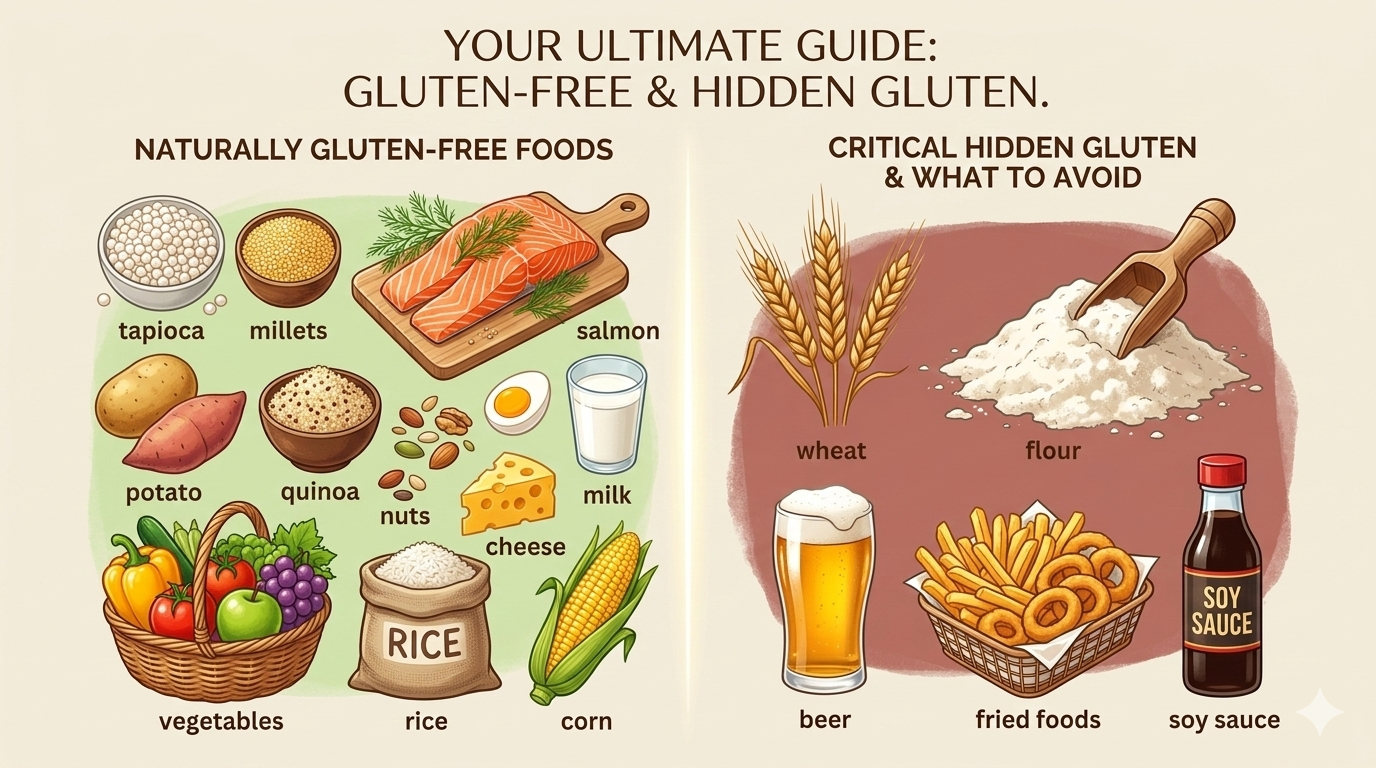
I’ve compiled this guide based on the visual pillars of a safe kitchen. This is the “No-Fluff” protocol I wish I had when I first started. If you’re coming from Pinterest, you’re likely looking for high-impact, scannable information that you can save and reference during your next meal prep session. Let’s dive in.
1. The Safe Grains and Starches: Your Energy Foundation
When you cut out wheat, the biggest fear is “What will I eat for energy?” The good news is that the earth provides incredible, naturally gluten-free complex carbohydrates.
Rice: The Universal Safe Haven
Rice is the backbone of the gluten-free diet. Whether it’s white, brown, jasmine, or basmati, rice is 100% safe.
- Pro-Tip: Always rinse your rice to remove excess starch. If you’re buying “seasoned” rice mixes, stop. Those often contain hydrolyzed wheat protein or “natural flavors” that hide gluten. Stick to the plain grain.
Quinoa: The Protein Powerhouse
Quinoa is actually a seed, not a grain, making it a “pseudocereal.” It contains all nine essential amino acids.
- The Blogger’s Hack: Quinoa has a natural coating called saponin that can taste bitter and upset a sensitive stomach. Always soak and rinse it before boiling.
Millets: The Overlooked Supergrain
Millet is alkaline and easy to digest. It’s a staple in many cultures but often forgotten in the West. It has a mild, nutty flavor and a texture similar to couscous (which is wheat-based and a huge “no”).
Tapioca: The Baker’s Best Friend
Derived from the cassava root, tapioca (flour or pearls) is the secret to getting that “chew” in gluten-free baking. It is a pure starch and serves as an excellent thickener for sauces without the need for a wheat-based roux.
Corn and Potatoes
Both are naturally safe, but they are high-risk for cross-contamination in processed forms.
- Corn: Fresh corn is fine. Cornstarch is fine. However, many corn tortillas are blended with wheat flour for flexibility. Read your labels.
- Potatoes: A whole potato is your best friend. A frozen potato “wedge” from a bag often has a wheat-flour dusting to make it crispier in the oven.
2. Proteins and Dairy: Building Blocks Without the Bloat
Most protein sources are naturally gluten-free, but as someone who has been “glutened” by a marinated chicken breast, I urge you to be cautious.
Meat & Fish
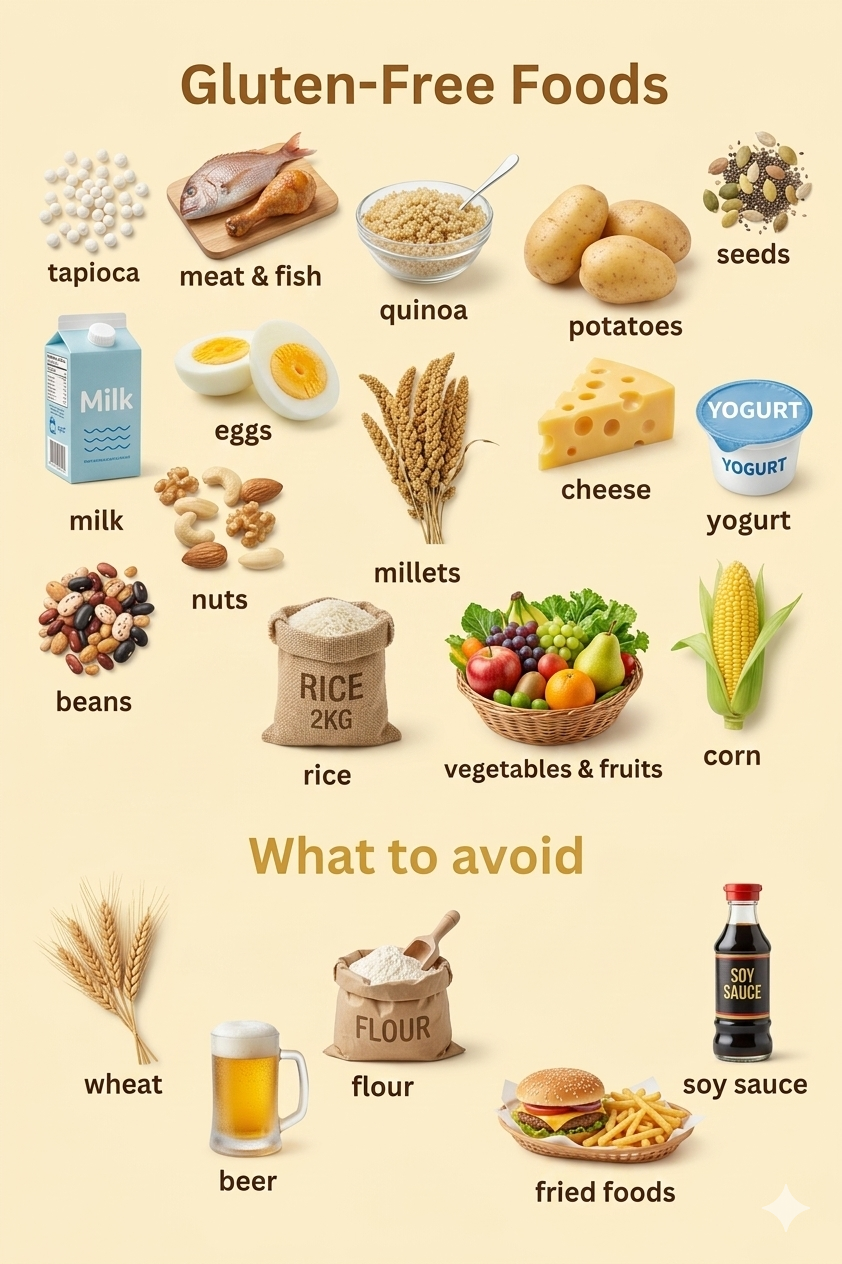
The image shows fresh salmon and chicken—these are your gold standards.
- The Danger Zone: Pre-marinated meats at the butcher counter. “Teriyaki” or “BBQ” marinades almost always use soy sauce (which contains wheat). Buy your meat naked and season it yourself.
Eggs
Eggs are a gluten-intolerant person’s “fast food.” They are safe, nutrient-dense, and versatile. There is zero risk here unless you’re eating them at a restaurant where they might use pancake batter in the omelets to make them fluffier (yes, some chains actually do this).
Milk, Cheese, and Yogurt
Standard dairy is gluten-free.
- Milk: Liquid milk is safe. Watch out for malted milk (malt = barley = gluten).
- Cheese: Blocks of cheese are safe. Avoid pre-shredded cheese if you are highly sensitive; some brands use wheat starch as an anti-caking agent to prevent the shreds from sticking together.
- Yogurt: Plain yogurt is safe. “Cookie crumble” or certain “thickened” low-fat yogurts may use modified food starch derived from wheat.
3. The Produce Section: Nature’s Safe Zone
Fresh fruits and vegetables are the only area of the grocery store where you can truly lower your guard.
Vegetables & Fruits
Whether it’s leafy greens, berries, or citrus, these are 100% safe. They provide the fiber that gluten-free diets often lack.
- Gut Health Tip: If you’ve recently been exposed to gluten, stick to cooked vegetables (steamed or roasted) rather than raw. Your gut lining is likely inflamed, and cooked fibers are easier to process.
Beans & Legumes
Beans are a fantastic source of plant-based protein.
- The Hidden Risk: Dried beans are often processed on the same equipment as wheat and barley. Always sort through your dried beans to look for “stray grains” and rinse them thoroughly.
4. Nuts and Seeds: The Healthy Fat Protocol
Nuts (walnuts, almonds, cashews) and seeds (pumpkin, sunflower, chia) are nutritional powerhouses.
- The Warning: “Dry roasted” nuts often use wheat flour as a carrier for the salt or spices.
- The Solution: Buy raw nuts and toast them in a dry pan at home. It tastes better and eliminates the risk of a reaction.
5. The “What to Avoid” List: The Silent Assassins
This is the most critical part of the guide. These five items are responsible for 90% of accidental “glutening” incidents.
Wheat and All-Purpose Flour
This seems obvious, but it’s the sheer ubiquity that’s the problem. Flour is airborne. If you are a Celiac, eating in a kitchen where flour is being tossed (like a pizza parlor) can be enough to trigger a reaction via inhalation and ingestion.
Beer: The Liquid Bread
Beer is made from barley or wheat. It is essentially liquid gluten.
- The Alternative: Look for “Dedicated Gluten-Free Beer” (made from sorghum or millet). Avoid “Gluten-Removed” beers if you are highly sensitive, as the testing for these is often debated in the Celiac community.
Soy Sauce: The Hidden Trap
Most people assume soy sauce is just soy and salt. It isn’t. Traditional soy sauce is brewed with wheat.
- The Swap: Use Tamari. It tastes exactly the same but is brewed without wheat. If you’re at a sushi restaurant, bring your own travel-sized bottle of Tamari.
Fried Foods: The Cross-Contamination Nightmare
This is the hardest lesson for every gluten-intolerant person to learn.
- The Shared Fryer: A french fry might be naturally gluten-free, but if it’s fried in the same oil as breaded chicken nuggets, it is now coated in gluten.
- The Rule: If a restaurant doesn’t have a dedicated gluten-free fryer, the fried food is NOT safe. Period.
6. How to Build a Gluten-Free Pantry (The Pinterest Checklist)
If you’re looking to “Pin” a quick shopping list, here is your essential starter kit based on our guide:
- Base Grains: Basmati Rice, Quinoa, Millet.
- Thickeners: Tapioca Starch, Cornstarch.
- Proteins: Fresh Eggs, Wild-Caught Salmon, Plain Chicken Breast.
- Healthy Fats: Raw Walnuts, Pumpkin Seeds, Extra Virgin Olive Oil.
- Dairy: Plain Greek Yogurt, Blocks of Aged Cheddar.
- The Safe Swaps: Tamari (instead of Soy Sauce), Apple Cider (instead of Beer).
7. The Emotional Side of Being Gluten-Free
I want to end on a personal note. Being gluten-intolerant can feel isolating. You become “that person” at the dinner party asking a million questions.
Don’t apologize for protecting your health.
Every time you choose a whole, naturally gluten-free food (like the ones in the “What to Eat” section of the image), you are choosing to heal your gut. The transition from “What am I allowed to have?” to “Look at all this incredible food I get to eat” is a mental shift that changes everything.